


© Copyright 2024 by Aakaara . All Rights Reserved
How Modern Architects Are Revolutionizing Living Spaces with AI
How Modern Architects Are Revolutionizing Living Spaces with AI
Blog Summary
Artificial Intelligence is transforming how modern architects design modern homes and living spaces. From data-driven site analysis and optimized layouts to energy-efficient planning and smart home integration, AI enables architects to create sustainable, future-ready environments. Intelligent systems improve lighting, ventilation, climate control, and security while reducing construction waste and long-term energy costs. Advanced 3D visualization and virtual walkthroughs also enhance client experience by allowing homeowners to see their projects before construction begins. By combining creativity with technology, architects are redefining modern house design, making homes smarter, more efficient, environmentally responsible, and better suited to today’s evolving lifestyles.
Table of Contents
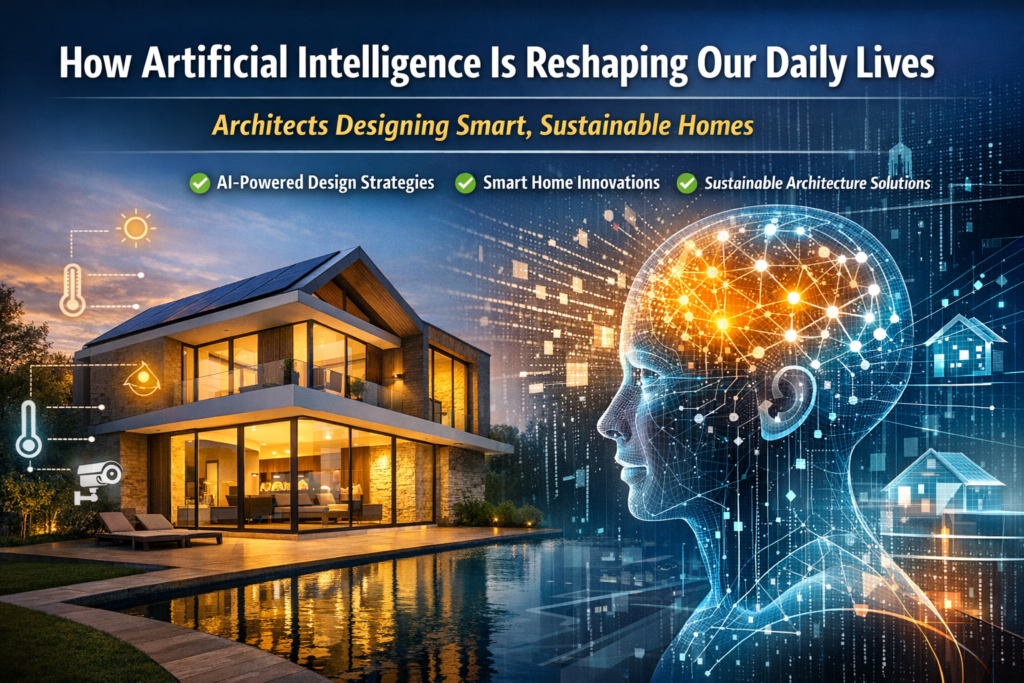
Artificial Intelligence (AI) is no longer a futuristic concept — it is actively transforming how modern architects design, plan, and build modern homes. From smart automation to data-driven sustainability strategies, AI is reshaping daily life through smarter architectural decisions. By using intelligent design tools and predictive technologies, modern architects can create homes that are more efficient, sustainable, and better suited to contemporary living.
Today, architects are not just designing buildings; they are designing intelligent living experiences. By integrating AI into planning, visualization, sustainability, and smart home systems, architects are creating future-ready homes that are efficient, adaptive, and environmentally responsible.
In cities like Coimbatore, forward-thinking firms such as Aakaara Architects are embracing advanced technology to redefine modern house design and smart home architecture.
What Is AI in Architecture?
Artificial Intelligence in architecture refers to the use of machine learning algorithms, data analytics, predictive modeling, and automation tools that assist architects in making informed design decisions.
AI allows architects to:
- Analyze environmental and climate data
- Predict building performance
- Optimize spatial layouts
- Improve energy efficiency
- Enhance visualization accuracy
Instead of relying solely on manual calculations and traditional drafting methods, architects now use AI-powered software to simulate real-world scenarios before construction begins.
This shift enables architects to reduce risk, improve accuracy, and deliver higher-quality projects.
How Architects Use AI in Modern House Design
1. Data-Driven Site Analysis
Before designing a home, architects must evaluate sunlight direction, wind flow, temperature variations, and topography. AI tools analyze this data instantly, helping architects determine the most efficient building orientation.
Benefits include:
- Better natural lighting
- Improved ventilation flow
- Reduced heat gain
- Lower energy consumption
This ensures modern house design is both comfortable and climate-responsive.
2. Optimized Space Planning
AI-powered tools can generate multiple layout options based on:
- Family size
- Functional requirements
- Lifestyle preferences
- Plot dimensions
Architects can compare variations in seconds, allowing clients to choose layouts that maximize space efficiency.
This improves:
- Room connectivity
- Storage solutions
- Privacy zones
- Circulation flow
Smart space planning enhances everyday living.
3. Energy-Efficient Architecture
Energy modeling software allows architects to simulate energy usage before construction.
AI helps architects:

- Optimize insulation strategies
- Plan shading systems
- Position solar panels correctly
- Reduce HVAC load
By predicting long-term energy performance, architects design homes that reduce electricity bills and environmental impact.
Smart Home Architecture: The Future Designed by Architects
Modern homes are no longer passive structures — they are intelligent systems.
Intelligent Lighting Systems
AI-enabled lighting adapts based on:
- Time of day
- Occupancy patterns
- Natural light levels
Architects now plan lighting systems that reduce energy waste while improving ambiance.
Automated Climate Control
Smart thermostats learn user behavior and automatically adjust temperature settings. Architects integrate climate control systems during design planning to ensure seamless installation.
This improves:
- Indoor comfort
- Energy savings
- Air quality management
AI-Driven Security Systems
Security has become a major concern in urban living. Architects incorporate:
- Facial recognition entry systems
- Motion-detection surveillance
- Remote monitoring solutions
Smart security integration enhances safety without compromising aesthetics.

Sustainable Architecture: How AI Supports Green Design
Sustainability is a responsibility for modern architects. AI strengthens eco-friendly architecture in powerful ways.
Climate-Responsive Design
AI analyzes regional weather patterns to help architects design:
- Cross-ventilation systems
- Heat-resistant facades
- Optimal window placements
This reduces dependency on artificial cooling.
Material Optimization
AI systems calculate exact material requirements, minimizing waste during construction.
- Reduced material costs
- Lower carbon footprint
- Efficient structural design
Sustainable architecture becomes measurable and data-backed.
Solar Energy Integration
AI tools determine ideal solar panel angles and placements. Architects can simulate:
- Annual energy generation
- ROI timelines
- Seasonal performance
This ensures homes produce clean energy efficiently.
AI-Powered Visualization: Enhancing Client Experience
One of the biggest transformations AI brings to architects is enhanced visualization.
Realistic 3D Renderings
AI-driven rendering software produces high-definition 3D images that look almost real.
Clients can:
- Experience interiors virtually
- Understand scale and proportions
- Make confident design decisions
This reduces miscommunication between architects and homeowners.
Virtual Walkthroughs
Before construction begins, clients can walk through their future home using virtual simulations.
Benefits include:
- Faster approvals
- Design refinements before execution
- Fewer on-site changes
Architects deliver precision and transparency through immersive technology.
Why AI Matters for Architects in Growing Cities
Urban centers are expanding rapidly. Cities like Coimbatore require smarter infrastructure and energy-efficient homes.
AI enables architects to:
- Design compact urban homes
- Optimize land usage
- Reduce environmental strain
- Plan sustainable communities
Forward-thinking firms like Aakaara Architects are combining creativity with intelligent systems to build homes that match modern lifestyles.
The Competitive Advantage for Architects Using AI
Architects who integrate AI gain a significant edge in the industry.
Advantages include:
- Faster project turnaround
- Accurate cost estimation
- Reduced design revisions
- Better sustainability ratings
- Enhanced client satisfaction
Technology does not replace architects — it empowers them to deliver superior outcomes.
The Future of Architects in an AI-Driven World
Artificial Intelligence will continue to evolve. However, creativity, empathy, and vision remain human strengths.
Architects combine:
- Technical precision
- Design creativity
- Environmental responsibility
- Client understanding
AI simply enhances these capabilities.
The future belongs to architects who embrace technology while maintaining timeless design principles.
Conclusion: AI Is Redefining Architects and Everyday Living
Artificial Intelligence is transforming daily life — from communication to transportation and now architecture. Architects are using AI to design homes that are smarter, safer, and more sustainable.
Modern house design is no longer just about aesthetics. It is about performance, efficiency, and adaptability.
Firms like Aakaara Architects are leading this transformation by integrating innovation into every project.
If you are searching for architects who combine creativity, sustainability, and intelligent design solutions, now is the time to embrace AI-powered architecture.
The future of living begins with smarter architects.